Ask any Pakistani household about the best desi ghee and the debate starts instantly: cow ghee (gaaye ka ghee) or buffalo ghee (bhains ka ghee)? Both are staples in desi kitchens, both come from real milk, and both carry that rich, nutty flavour no banaspati or cooking oil can copy. But they are not the same product. Price, taste, texture and even how your stomach handles them all differ.
If you are standing in a dairy market in Lahore or scrolling through online stores trying to decide which one deserves a place in your kitchen, this guide breaks down the real differences — so you can pick the right one for your cooking, your budget, and your family.
The Real Difference: What’s Inside Each Ghee
Ghee is simply clarified butter made by slowly simmering milk butter until the water evaporates and the milk solids separate. What changes everything is the source milk. Buffalo milk naturally contains 7–8% fat compared to cow milk’s 4–5%, which is why:
- Buffalo ghee is whiter, thicker, and richer in fat. It is the default desi ghee in most Pakistani bazaars because buffalo milk is far more abundant here.
- Cow ghee is golden-yellow (from natural beta-carotene in cow milk), more aromatic, and traditionally described as lighter on digestion.
Both contain almost no lactose or casein once fully clarified, since the milk solids are removed during the simmering process. That said, if you have a diagnosed dairy allergy (not just lactose intolerance), it is wise to consult a healthcare professional before adding ghee to your diet.
Taste and Aroma: Which One Smells Like Home?
This is where personal preference takes over. Buffalo ghee has a mild, creamy, almost sweet flavour with a subtle aroma. It melts into parathas, dal and halwa without dominating the dish — which is why it is the go-to choice for everyday Pakistani cooking.
Cow ghee announces itself. It has a stronger, sharper aroma and a grainier texture (the famous dana) that many Pakistanis associate with “real” ghee from the village. Drizzled on hot rice or a desi-style kichri, its fragrance is unmistakable.
Neither is objectively better — buffalo ghee is the quiet all-rounder, cow ghee is the flavour star. Many families in Pakistan keep both: buffalo ghee for daily cooking, cow ghee for finishing dishes and special occasions.
Price in Pakistan: What You’ll Actually Pay
Because buffalo milk is more widely produced in Pakistan, buffalo desi ghee is usually the cheaper of the two in local markets. Cow ghee commands a premium because genuine cow-milk ghee is scarcer — and unfortunately, this is exactly why the market has more adulterated “cow ghee” sold at suspiciously low prices.
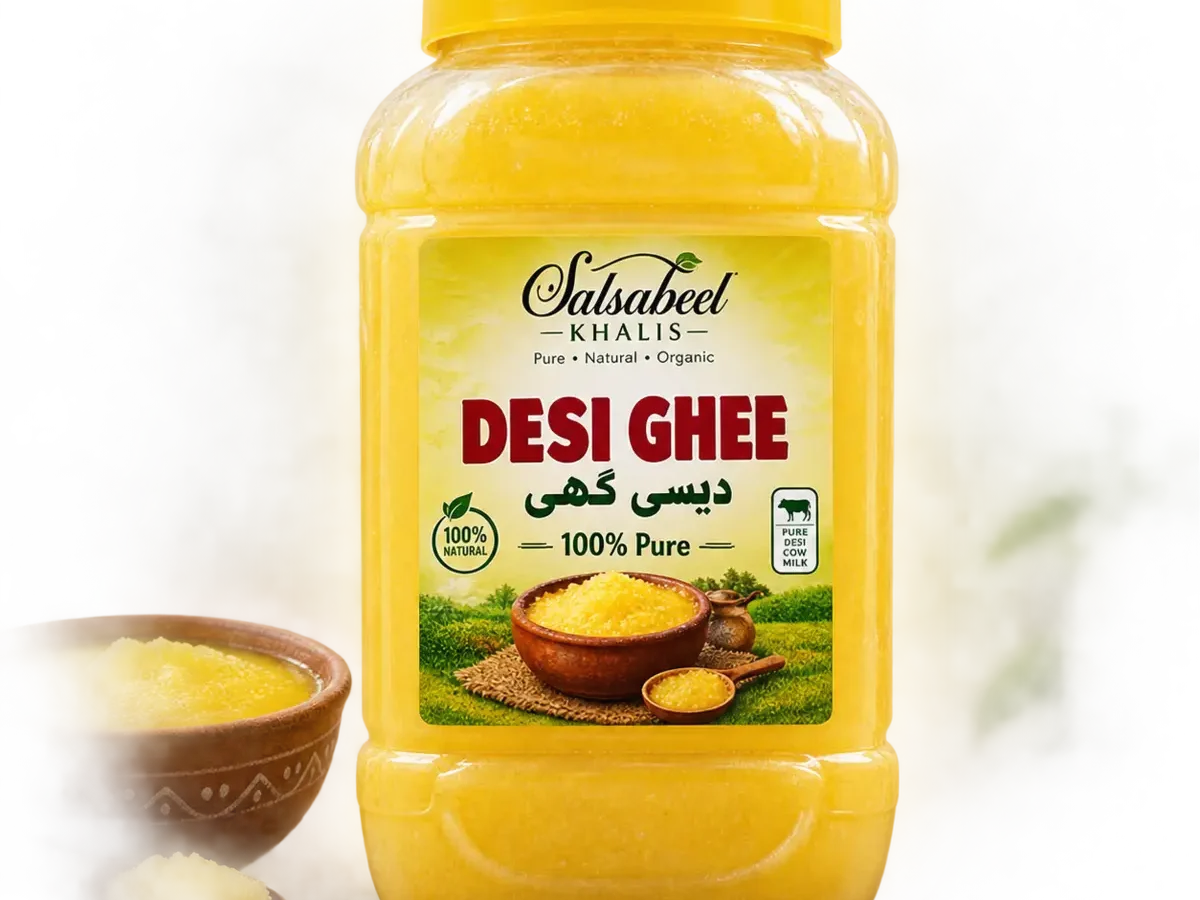
At Salsabeel Khalis, pure desi ghee (1kg) is priced at Rs. 3,000 (down from Rs. 3,500) and the 500g pack at Rs. 1,500 — with cash on delivery anywhere in Pakistan. When comparing prices across sellers, be cautious of deals far below this range; real, pure ghee has a real cost, and rock-bottom prices are the classic red flag of mixed or vegetable-fat ghee. For a deeper look at pricing, see our desi ghee price guide for Pakistan.
Texture, Colour and Cooking Behaviour
In the jar, the two ghee types look and feel different:
- Colour: Cow ghee is golden-yellow; buffalo ghee is pale, almost white.
- Texture: Cow ghee tends to be more granular with visible grains; buffalo ghee sets smoother and thicker in winter.
- Summer melting: Both melt in Pakistani summers (30–45°C), which is completely normal — pure ghee melts, mixed ghee sometimes does not. Genuine ghee re-solidifies evenly when cooled.
- Cooking: Buffalo ghee’s mild profile suits frying samosas and pakoras, while cow ghee’s aroma shines in tempering (tarka) and sweets like gajar ka halwa and sheer khurma.
One quick authenticity tip used across Pakistan: rub a small amount between your palms — real ghee melts quickly and leaves a smooth, non-greasy warmth; adulterated ghee can feel waxy or sticky.
Traditional Uses and Health Notes
In traditional and Ayurvedic practice, cow ghee has a long reputation as the lighter, more easily digestible option, commonly used in daily diets and traditional remedies. Buffalo ghee is traditionally valued for its richness and energy density — popular for growing children, athletes, and winter diets where extra nourishment is welcome.
These are traditional and commonly reported uses, not medical claims. Neither type will cure anything on its own, and ghee is still a calorie-dense fat — moderation matters. If you are managing cholesterol, blood pressure, diabetes, are pregnant, or take regular medication, consult a healthcare professional about how much ghee fits your diet. And never give honey (or any sweetener) to infants under one year old — a separate but important kitchen-safety rule.
Which One Should You Buy? Our Honest Verdict
Here is the straightforward answer based on how most Pakistani kitchens actually cook:
- Choose buffalo ghee if you want an affordable, mild, everyday cooking fat — the workhorse for frying, roasting and daily dal.
- Choose cow ghee if you love bold desi aroma, want the traditional lighter option, and don’t mind paying more for genuine quality.
- Do what many Pakistani families do: keep buffalo ghee for daily cooking and a jar of cow ghee for finishing dishes, sweets and special meals.
Whichever you choose, buy from a seller who is transparent about the source and purity. If you are also weighing ghee against cooking fats, our Desi Ghee vs Banaspati breakdown covers that comparison in full.
FAQs: Cow Ghee vs Buffalo Ghee in Pakistan
Is cow ghee healthier than buffalo ghee?
In traditional practice, cow ghee is described as lighter and easier to digest, while buffalo ghee is richer in fat and energy. Both are pure dairy fats with similar core nutrition. “Healthier” depends on your diet, activity level and health conditions — check with a healthcare professional if you have cholesterol or heart concerns.
Why is cow ghee more expensive than buffalo ghee in Pakistan?
Buffalo milk is produced in much larger quantities across Pakistan, so buffalo ghee is more abundant and cheaper. Genuine cow-milk ghee is scarcer, which drives its price up — and makes suspiciously cheap “cow ghee” a likely fake.
How can I tell if my desi ghee is pure or mixed?
Pure ghee has a clean, rich aroma, melts quickly between warm palms, and re-solidifies evenly. A simple home test: heat a spoonful — pure ghee melts rapidly and turns golden-brown with a pleasant smell, while adulterated ghee may sizzle oddly, smoke, or leave residue. Buying from a trusted seller is the safest shortcut.
Can people with lactose intolerance eat desi ghee?
Properly clarified ghee contains only trace lactose, and many lactose-intolerant people tolerate it fine. But tolerance varies, and a true milk allergy is different from intolerance. Start with a small amount or consult your doctor first.
Order Pure Desi Ghee Online in Pakistan
Whether your kitchen runs on cow ghee, buffalo ghee, or both, purity is what matters most. Salsabeel Khalis Desi Ghee is 100% pure — 1kg for Rs. 3,000 and 500g for Rs. 1,500, with cash on delivery across Pakistan.
📲 Order on WhatsApp: https://wa.me/923047832121
🏪 Wholesale: Shopkeepers, bakeries and restaurants — contact us on WhatsApp for bulk pricing on desi ghee and our full range.